To help those of you with kids plan an epic domestic trip, I’ve asked Karen from The MOM Trotter to share her tips and advice. She’s been traveling in an RV with her family for almost two years and knows exactly how to make the most of a family RV trip!
RVing with children is a fantastic opportunity to make enduring family memories. It always makes life more enjoyable, from the thrill of discovering new things to the delight of the small pleasures like stopping for ice cream or discovering that strange attraction that you happened upon.
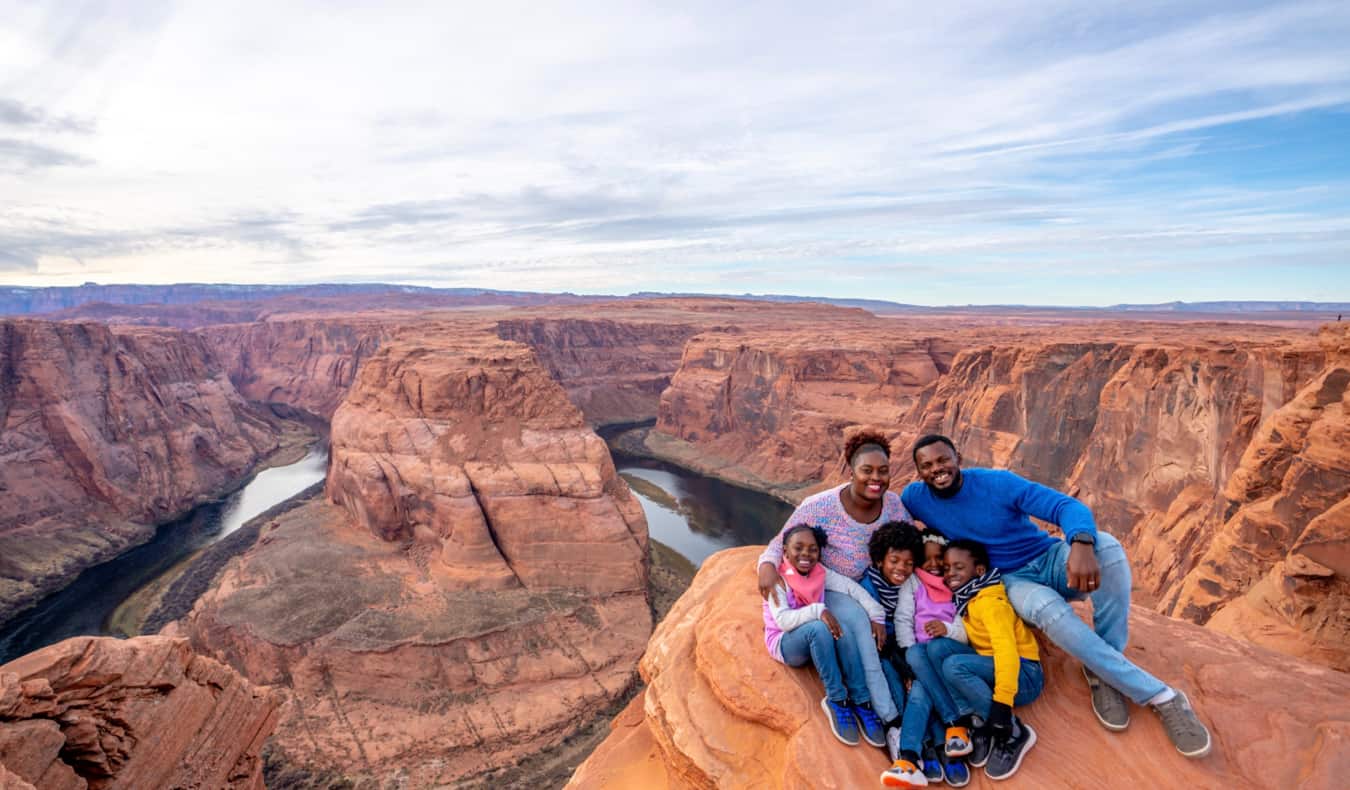
In November 2019, my family and I went on a trip that exposed us to the world of RVing. After renting one from Outdoorsy, we embarked on a two-week journey to see Joshua Tree National Park in California, state parks and monuments in Arizona and Nevada, and all five national parks in Utah. After this vacation, we fell in love with RVing, and a few months later, we sold our California house and bought our own RV.
However, this type of travel necessitates some planning. You can not simply get in your car and drive. You will need to make plans, organize yourself, set limits and ground rules, and be ready for anything the road may present. Even though all of that may seem overwhelming, there are many similarities between it and organizing any other trip.
However, things will not always be easy. There will be obstacles in your path, both literally and figuratively. But it is one of the greatest family adventures you will ever have.
These tips will help you prepare for the journey as best as possible, allowing you to focus more on fun and less on roadblocks.
1. Find the Right RV
There are so many different types of RVs, from those you can drive to those that need to be pulled with a truck. If you don’t own one, research the size and type of RV that will match your family’s needs.
When renting an RV or even buying one, it is important that you check how many people it can sleep. When we rented our first RV, I was planning a trip for six people — two adults and four young ones — so I found one with a bunk room so that the kids would have enough space to sleep and feel comfortable.
We love to cook, so finding an RV with a decent-sized kitchen was also high on our list. It’s good to look for one with a spacious living room and dining area as well, but keep in mind that you’ll be spending lots of time outside, so indoor space might not matter as much as you might expect.
RVLove has tons of resources for helping you learn more about what RV is best for you, your family, and your budget.
If you’re not ready to purchase an RV, keep in mind that there are tons of places that rent RVs too. You can start with RVShare for affordable local rentals (it’s like Airbnb but for RVs).
2. Set Expectations
Setting expectations for your next vacation is crucial. For the children to have some form of structure while traveling, they must be aware of all the ground rules and expectations.
Discuss who will be in charge of what tasks, how much assistance you expect to set up and take down your camp, and the regulations around gadgets, other devices, and screen time. If your kids have never gone camping before, it is also crucial to teach them campground etiquette. Making too much noise and going wild, especially on other people’s RV plots, is discouraged when your neighbors are so near. There is only so much room for everyone in an RV park. It is crucial that your children stay out of other travelers’ space.
3. Clearly Define Personal Space
Due to their tiny size, RVs require consideration and respect for personal space when traveling with children.
Prior to your trip, you should talk about where each member of the family will be sleeping and stress that everyone should respect that area when it is time to go to bed.
You can also establish guidelines about bathroom time. Since most people only have one restroom, it will be highly beneficial to establish a plan that ensures everyone has an equal amount of time. Reminding the kids to always knock before entering any area of the RV and letting them know who gets to use the restroom first in the morning are other aspects of defining personal space.
If tent camping is permitted at the RV park you are visiting, think about letting your older family members— like teenagers —set up a tent outside since they might find it much more enjoyable.
4. Get (and Stay) Organized
No matter where you are, organization is essential when it comes to kids. When it comes to RVing, this is particularly true.
No matter how big the RV is, there is only so much room, therefore it is important to make room for the kids to store their toys, books, electronics, and other belongings. Make sure they understand that while not in use, their belongings should always be returned to their original locations. If not, your area may quickly become congested. Establish a cleaning and tidying plan to help everyone develop the habit of maintaining order in the area.
Establishing a regular routine that children can observe and adhere to will help them stay organized by letting them know what to expect and when. For instance, providing a menu will help children learn the routine by letting them know what is for breakfast and dinner.
RVing is about having fun and being free, but in the middle of it all, try to maintain the routines you have at home, such as mealtimes, bedtimes, and naps.
5. Set a Cleaning Schedule
We are all aware of how easily a house full of kids can spiral out of control. Now picture that taking place in an RV. Things can quickly deteriorate.
Establish a cleaning regimen for the children and yourself. This is an excellent method of teaching children about the RV itself and fostering a strong work ethic and helpfulness.
Regular cleaning may and should include older kids as well. It teaches kids the importance of supporting the family and saves you some labor. They can assist with maintenance activities associated to RVs, such as adding chemicals to the freshwater and emptying the gray water tanks, if they are old enough.
6. Map Out Your Stops
RVing offers you some independence, but there are some restrictions. Even the smallest RV is very large unless you are traveling in a conversion van. Therefore, find locations that are convenient for your rig to stop at before your trip.
Gas stations, truck stops, and even Walmart parking lots are excellent locations to take a break, eat, refuel, and possibly get any necessities that may have slipped through your packing.
It is really helpful to map out stops. You may travel with peace of mind if you know where you are going to stop for food, petrol, and overnight parking. You can make appropriate plans and unwind once the necessities are taken care of.
If an issue occurs, scheduling frequent stops for food and gas can also be helpful. We once had a flat tire on a Friday night in a small city, and as there was no open tire shop nearby, we were unable to leave until Monday morning. We could have avoided this predicament if we had scheduled our stop in a more convenient location. (Of course, not every circumstance like this can be prevented, but the more you prepare, the fewer problems you will run across).
This is also important while traveling as a Black family because we need to make sure we don’t end up in the wrong city at the wrong time of the night.
7. Choose the Right RV Park
Selecting the ideal RV park is one of the most crucial aspects of RVing as a family. If you enjoy being in nature, you should pick a state or RV park with lots of trees and hiking trails close by. Choose one with features like a pool, a lazy river, a playground, Wi-Fi, etc. if you would prefer a more glamping experience. (All of that, along with a water park and monthly kid-friendly events, can be found in Galveston, Texas, one of my son’s favorite places.)
We have had the chance to visit both kinds of RV parks, and we both enjoyed them. Depending on what you are searching for, neither is superior to the other. To find out which are best for your family’s size and travel requirements, give a few a call in advance.
GoRVing and RoverPass are a great resources for finding RV parks.
Additionally, here’s a list of some of our favorite family-friendly parks.
8. Shorter Travel Days are Best
The whole family is drawn to the excitement of the open road, but adults may be drawn to it a bit more. Children need time to unwind, especially younger ones. Recall that it can be extremely taxing for a child to spend hours sitting still.
If you have older children, make sure your trip duration is no more than five or six hours; if you have toddlers, it can be as short as three or four hours. In order to prevent kids from being nervous about the lengthy drive, try to travel during sleep periods.
Make sure you have lots of snacks and activities to keep your kids occupied if you must drive for extended periods of time. You will find it easier as well.
9. Keep Snacks and Finger Foods Handy
The easiest way to keep children entertained during long drives is to offer them as many snacks as you can. You’ll be surprised to find out that your kids will want snacks so much more than normal on long road trips.
So bring along prepackaged or store-bought snacks and water bottles or juice boxes that they can keep nearby to limit the temptation for them to get up and roam around the RV while you’re cruising down the interstate.
10. Take a Day Off
One of the most fun things you can do when RVing is taking a day off from driving. Of course, you have to reach that final destination, but don’t forget to stop and smell the roses along the way. Nothing beats a day of just hanging out with the family and seeing what an area has to offer.
On our first RV trip, we had almost no days off, as we wanted to see everything in the short time that we had. Because of this, we were so tired after our trip.
Now that we are slow traveling, we plan for lots of days off, when we can just relax by the fire and unwind.
11. Pack Some Entertainment
Board games are a great way to bond as a family, and they’re an excellent source of entertainment. They provide lots of family time, promote togetherness, and are the perfect entertainment platform for the slower pace of an RV road trip.
But kids need variety, especially when playing on their own. In addition to any tablets they might have, think about packing things like coloring books, bubbles, Play-Doh, and, if your camper has a DVD or Blu-Ray player, their favorite movies.
12. Create an Outdoor Playspace
Once you’re all settled in at a stop, set the kids up with an outdoor playspace. All you need is some sort of waterproof mat that you can unroll to create an area that’s perfect for building blocks, toys, and other fun.
If you’re traveling with toddlers or babies, bring along a baby gate or two or even a collapsible playpen. These are excellent for keeping young children safe while outdoors by the campfire or keeping them out of potentially dangerous areas inside your RV.
13. Safety First
If you’re camping, be sure that they understand the boundaries of the camp and where they can go unattended, if at all.
In addition, it’s important to talk about safety if you plan to hike in any national park. Be sure the young ones understand the importance of paying attention to their surroundings, giving local wildlife plenty of space, and respecting nature. Make sure you have a well-stocked first-aid kit in your RV too. It’s always better to be safe than sorry.***
From planning to packing and sightseeing safety, these tips for RVing with kids will help keep your trip on the straight and narrow, so you can focus on fun.
One of the biggest keys to having a successful journey is to accept that things won’t go perfectly or smoothly at all times. Children are a constant wild card. They might be crabby out of nowhere; they might get a small owie and freak out — it could be anything. However, all of these things will pass, and in the grand scheme of things, they’ll only be a small part of the whole picture.
But, with these tips, you’ll be able to ensure a relatively smooth trip that builds family memories and togetherness and is full of adventure and fun.